
News
AquaPLAN partners showcase solutions to underwater noise pollution at OCEANOISE 2026
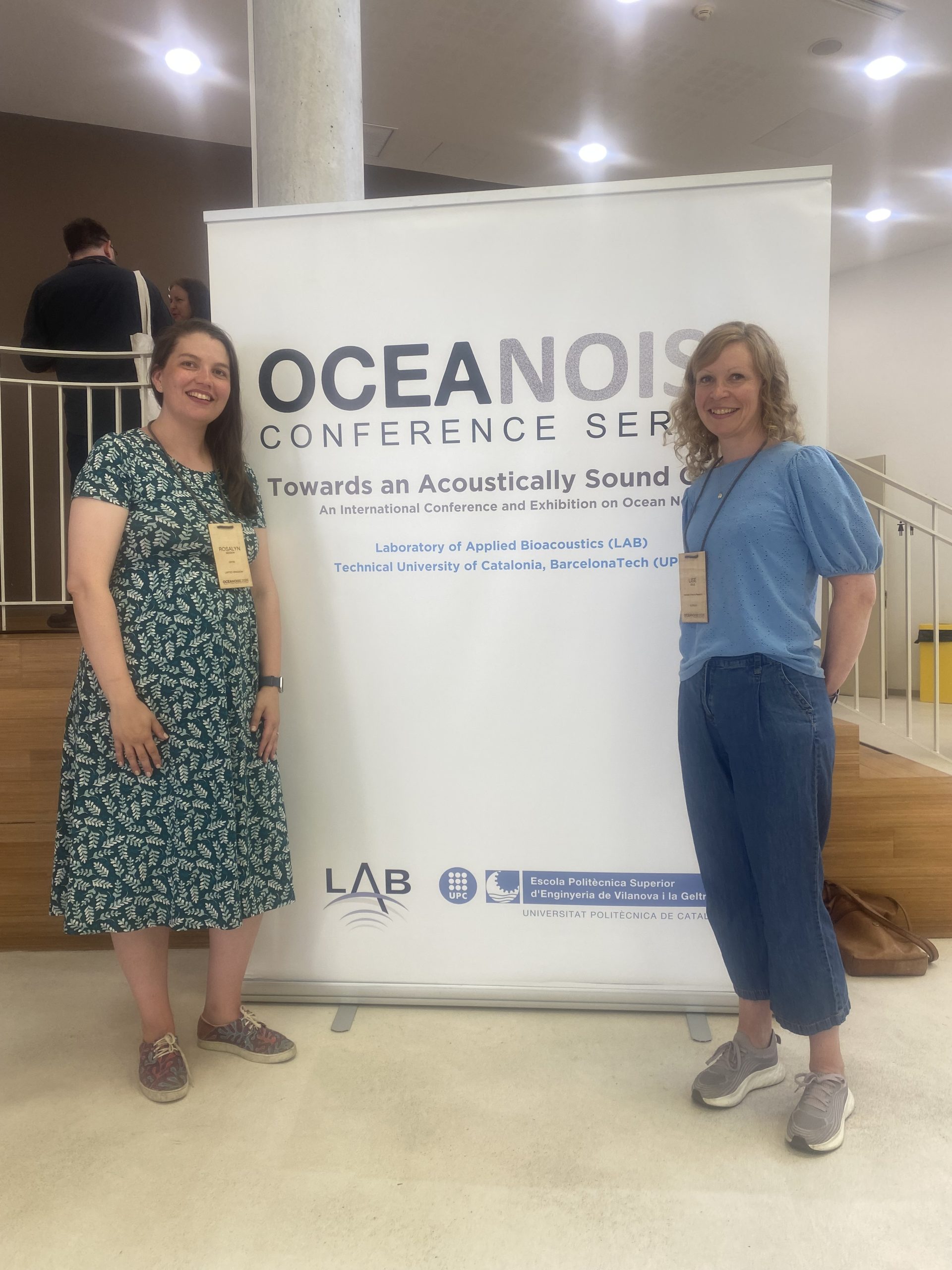
Rosalyn Seddon (The Centre for Environment, Fisheries and Aquaculture Science (Cefas)) and Lise Doksæter Sivle (Havforskningsinstituttet – Institute of Marine Research (IMR)) represented AquaPLAN at OCEANOISE 2026 in Vilanova i la Geltrú, Spain, from 25-29 May 2026. The conference brought together scientists, policymakers, and industry to tackle one of the ocean’s most invisible but growing pressures: underwater noise. As a Horizon Europe-funded project investigating the combined impacts of light and noise pollution (LNP) on aquatic biodiversity, AquaPLAN was well represented through presentations demonstrating both new scientific insights and practical management solutions. AquaPLAN aims to quantify how these stressors affect freshwater, coastal and offshore ecosystems while supporting the development of evidence-based mitigation strategies and policy recommendations.
Rosalyn delivered two presentations highlighting AquaPLAN’s progress in understanding and managing anthropogenic underwater noise. The first presentation showcased early findings from AquaPLAN’s stakeholder engagement activities and a technical evaluation of mitigation options designed to reduce noise at source. The work generated considerable interest among conference delegates, particularly regarding cumulative impacts and practical approaches to reducing pressures on marine ecosystems. Rosalyn’s second presentation focused on the OSPAR Regional Action Plan for Underwater Noise, which aims to reduce anthropogenic noise across the North-East Atlantic by 2030 through coordinated policy measures, improved spatial planning and sector-specific mitigation actions. Within AquaPLAN, Cefas plays a key role in bridging science and policy. As one of the project’s leading UK partners, Cefas contributes expertise in marine monitoring, ecosystem assessment, stakeholder engagement and environmental management. Its work helps ensure that AquaPLAN’s scientific findings can be translated into practical recommendations that support regulators, industry and conservation organisations in addressing LNP more effectively.
Representing IMR, Lise presented research investigating the combined effects of anthropogenic noise and Artificial Light at Night (ALAN) from shipping on predator-prey behaviour in offshore Norwegian waters. Her work addresses one of the central challenges of AquaPLAN: understanding how multiple human-induced stressors interact within aquatic ecosystems rather than examining them in isolation. The study contributes to the project’s broader effort to identify the mechanisms through which LNP influence species behaviour, ecological interactions and biodiversity conservation outcomes. By examining real-world shipping pressures in offshore environments, the research provides valuable evidence for developing more effective management measures that account for multiple environmental stressors simultaneously. As AquaPLAN’s Norwegian partner, IMR brings internationally recognised expertise in marine ecosystems, fisheries science, underwater acoustics and marine mammal ecology. The organisation plays an important role in advancing the project’s understanding of how anthropogenic pressures affect marine biodiversity across European waters.
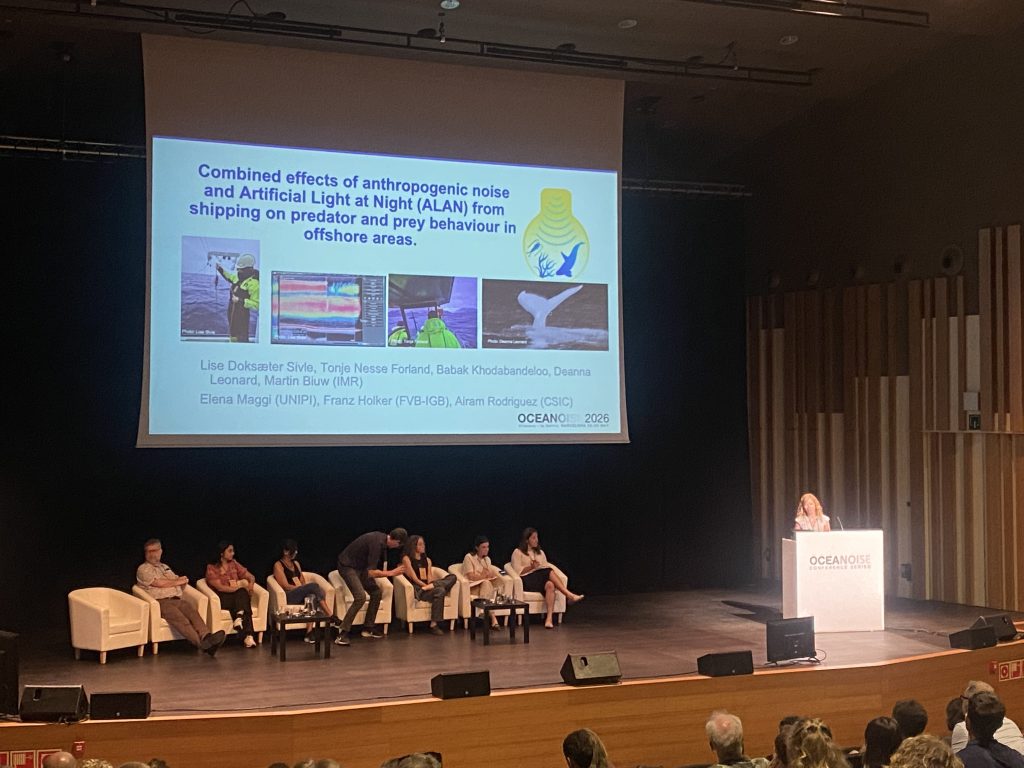
Lise Doksæter Sivle (IMR) presenting at OCEANOISE 2026
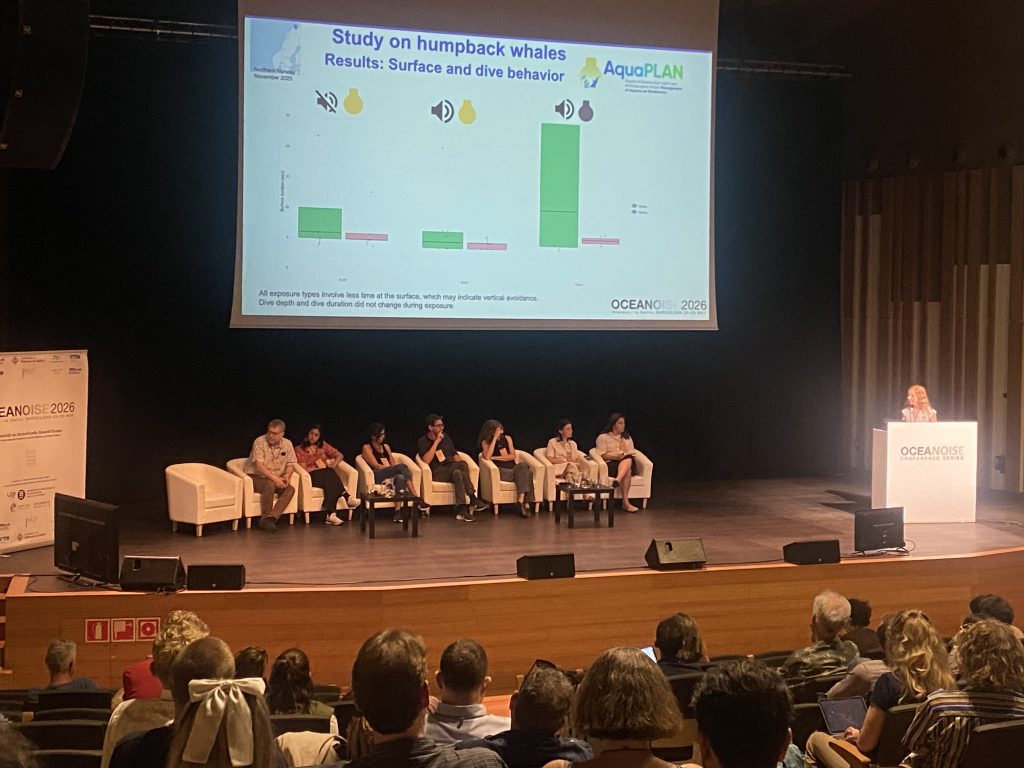
Lise Doksæter Sivle (IMR) presenting at OCEANOISE 2026
Hosted by the Laboratory of Applied Bioacoustics (LAB) at the Technical University of Catalonia (UPC), OCEANOISE 2026 reflected a growing shift within the scientific community – from documenting the impacts of underwater noise to implementing effective solutions. Discussions throughout the conference highlighted increasing momentum towards quieter, more sustainable ocean use and stronger protection for marine life. The contributions from Cefas and IMR demonstrated how AquaPLAN is helping to drive this transition by combining ecological research, stakeholder engagement and policy development. Through its interdisciplinary approach, AquaPLAN is building the scientific evidence needed to assess, prevent and mitigate the impacts of light and noise pollution on aquatic biodiversity across Europe.
Learn more about the event, check out its programme.
Keep up to date with all the latest from AquaPLAN