
News
AquaPLAN showcased in Pisa ahead of Biodiversity Week 2026
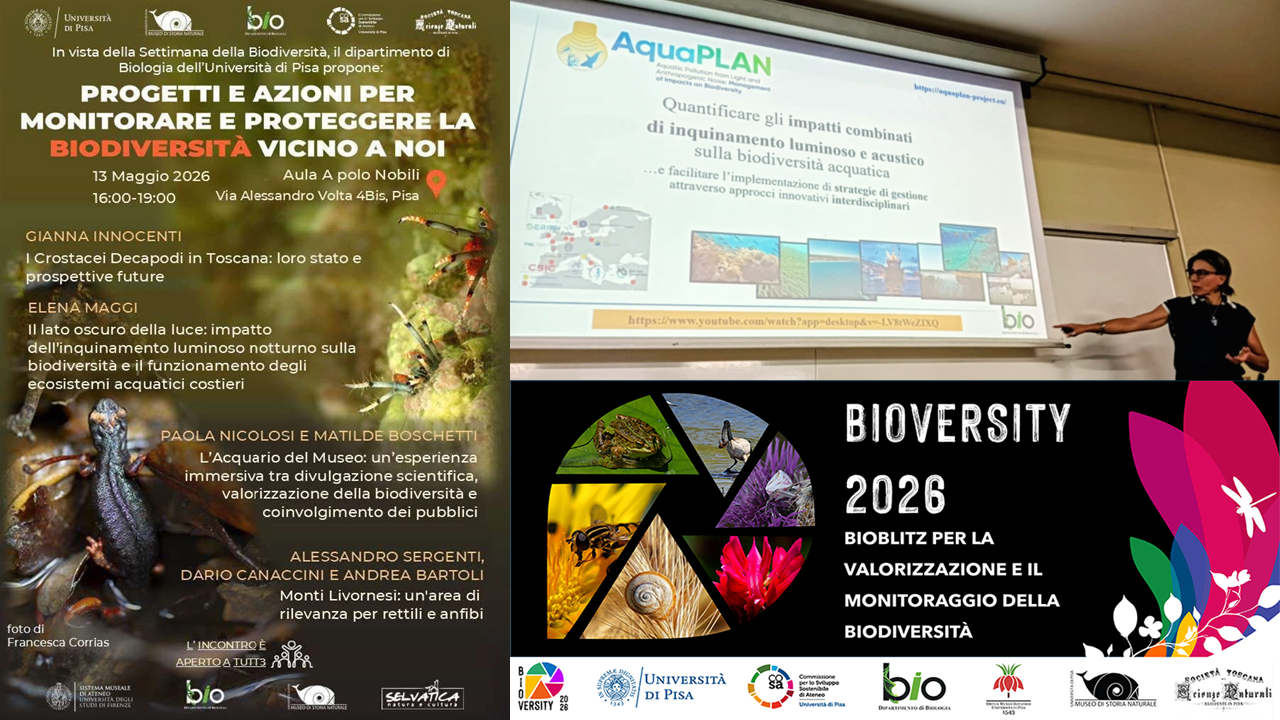
On 13 May 2026, the University of Pisa (UNIPI) hosted a well-attended seminar “Progetti e azioni per monitorare e proteggere la biodiversità vicino a noi / Projects and actions to monitor and protect biodiversity near us”, bringing together researchers and stakeholders from across Tuscany to share ongoing work on biodiversity monitoring and conservation. The event formed part of a short series of seminars organised by the Department of Biology to build momentum in the lead-up to Biodiversity Week 2026 (BioVersity 2026) — a major initiative that will see a wide programme of activities, workshops, and citizen science events take place across the Pisa region in celebration of the International Day for Biological Diversity on 22 May.
Held at the Polo Nobili campus, the seminar highlighted current research and practical actions aimed at understanding and protecting biodiversity at local and regional scales. Speakers travelled from Pisa, Livorno and Florence, reflecting the strongly collaborative nature of biodiversity research in Tuscany. The programme showcased a broad range of topics, from coastal and freshwater ecosystems to public engagement and conservation practice, illustrating how interdisciplinary approaches are essential to tackling biodiversity loss. The involvement of the Natural History Museum of the University of Pisa in Calci, a key stakeholder and long-standing partner in biodiversity outreach and research, further reinforced the link between academic research and local engagement. The museum plays an important role in scientific dissemination and public education, hosting collections, exhibitions and collaborative activities that connect science with the wider community.
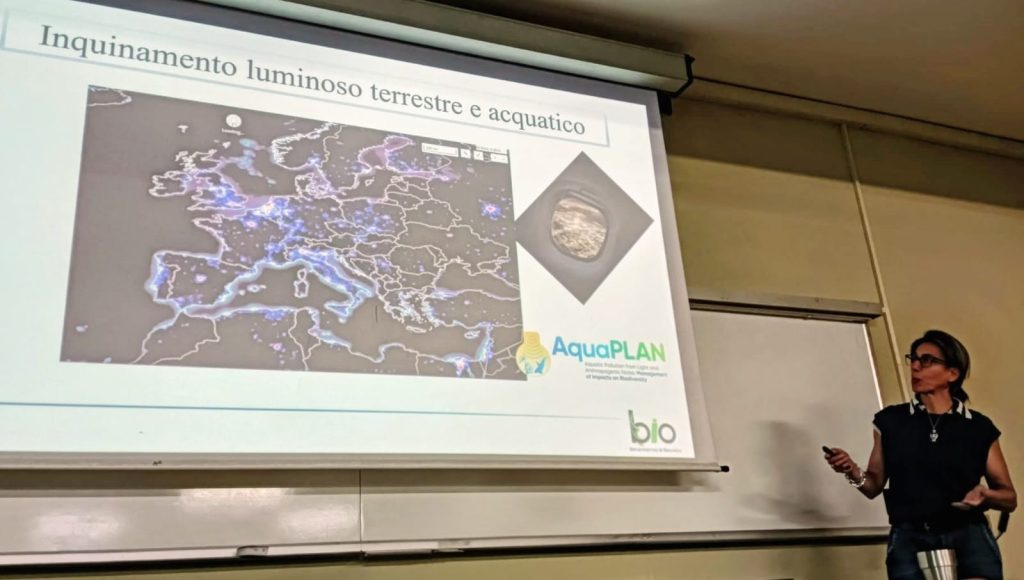
A highlight of the afternoon was the presentation by AquaPLAN coordinator, Elena Maggi. Her talk, entitled “Il lato oscuro della luce: impatto dell’inquinamento luminoso notturno sulla biodiversità e il funzionamento degli ecosistemi acquatici costieri / The dark side of light: impact of night-time light pollution on biodiversity and the functioning of coastal aquatic ecosystems”, explored the growing evidence on how artificial light at night (ALAN) affects biodiversity, with a particular focus on aquatic ecosystems. Drawing on AquaPLAN’s research, she outlined how light pollution can disrupt ecological processes, alter species behaviour, and ultimately affect ecosystem functioning. During her presentation, Elena referenced the project’s ongoing work, offering attendees, including academics, students and regional stakeholders, valuable insight into how AquaPLAN is addressing emerging environmental challenges. Her contribution was very well received, sparking interest, discussions and provided an excellent opportunity to raise awareness of the project among a diverse audience.
The seminar series is part of a broader effort by UNIPI to engage both the scientific community and the public in biodiversity issues. These events act as a bridge between research and action, setting the stage for the upcoming Biodiversity Week (BioVersity 2026). This year’s edition will feature a rich programme of activities dedicated to exploring biodiversity in everyday environments and encouraging active participation in its observation and protection. A key element is the BioVersity bioblitz (16–23 May 2026), which invites citizens, researchers and students to document local species and contribute to a shared biodiversity dataset. By bringing together local communities, institutions and researchers, the initiative embodies the International Day for Biological Diversity (IDB) 2026 theme: “Acting locally for global impact.” IDB is celebrated annually on 22 May to commemorate the adoption of the text of the Convention on Biological Diversity (CBD) and to provide an opportunity to foster wide support for the implementation of the Convention, its Protocols and related action frameworks.
Find out more about Biodiversity Week (BioVersity 2026) and how to get involved.
Keep up to date with all the latest from AquaPLAN