
News
Call for action from The Royal Astronomical Society to address light pollution

The RAS is calling for artificial light at night (ALAN) to be formally recognised as a pollutant, reflecting the growing scientific consensus on its damaging effects. Evidence presented at the Society’s 2025 conference shows that excessive or poorly managed lighting alters habitats, fragments ecosystems, and accelerates biodiversity loss—particularly for nocturnal species that depend on natural darkness. The impacts extend well beyond ecosystems. Exposure to light pollution, combined with reduced access to natural light cycles, has been linked to serious health risks, including metabolic disorders, sleep disruption, and increased rates of anxiety and depression. Light pollution also compromises astronomy, obscuring the night sky and limiting both scientific observation and public engagement with space. Crucially, the environmental consequences are measurable. Insects and pollinators are particularly vulnerable, with studies showing declines in populations and disruptions to plant–pollinator interactions—key processes underpinning ecosystem health.
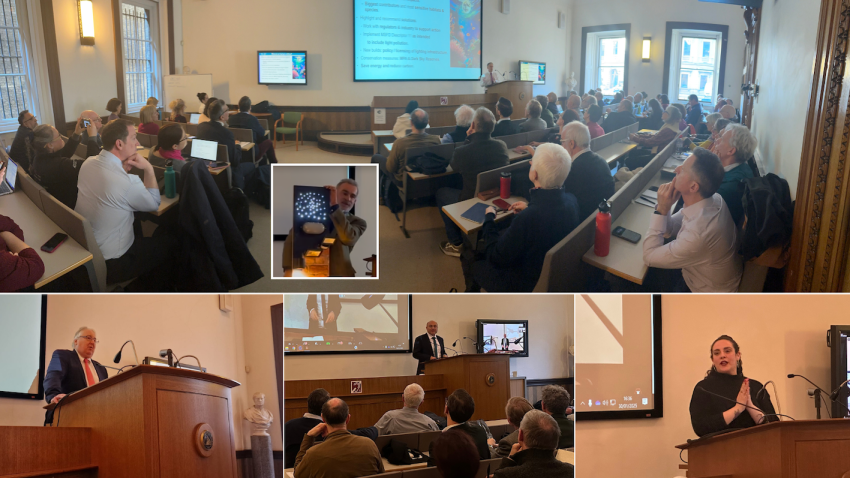
The RAS hosted a conference on the problem of light pollution in 2025, where compelling evidence was presented about the significant impacts of ALAN. Credit Royal Astronomical Society Licence type Attribution (CC BY 4.0)
The importance of translating scientific evidence into policy was a central theme of the RAS 2025 conference, “Light Pollution and its Impacts.” The event brought together experts from across disciplines, including ecology, astronomy, policy, and public health to explore practical solutions to light pollution. Notably, AquaPLAN and its sister project PLAN‑B played active roles in the programme, contributing cutting-edge research and policy perspectives. AquaPLAN researcher Tim Smyth (Plymouth Marine Laboratory (PML)) presented the latest science on light pollution in marine ecosystems, highlighting the specific vulnerabilities of aquatic environments. While PLAN‑B coordinator Yana Yakushina addressed the policy and regulatory landscape, outlining pathways to strengthen governance and integrate light pollution into environmental frameworks. The conference emphasised that tackling light pollution requires coordinated action across sectors, combining scientific evidence, regulatory innovation, and stakeholder engagement.
Recognising ALAN as an environmental pollutant in legal and policy frameworks would place it alongside other well-established forms of pollution such as air, water, and noise, and help drive more coherent and effective mitigation strategies. International frameworks are already beginning to acknowledge this issue. Light pollution is increasingly considered within biodiversity policy discussions, including under the Convention on Biological Diversity and related global commitments. Projects such as AquaPLAN and PLAN‑B are playing a key role in supporting this transition by providing the scientific evidence, tools, and policy recommendations needed to guide decision-makers.
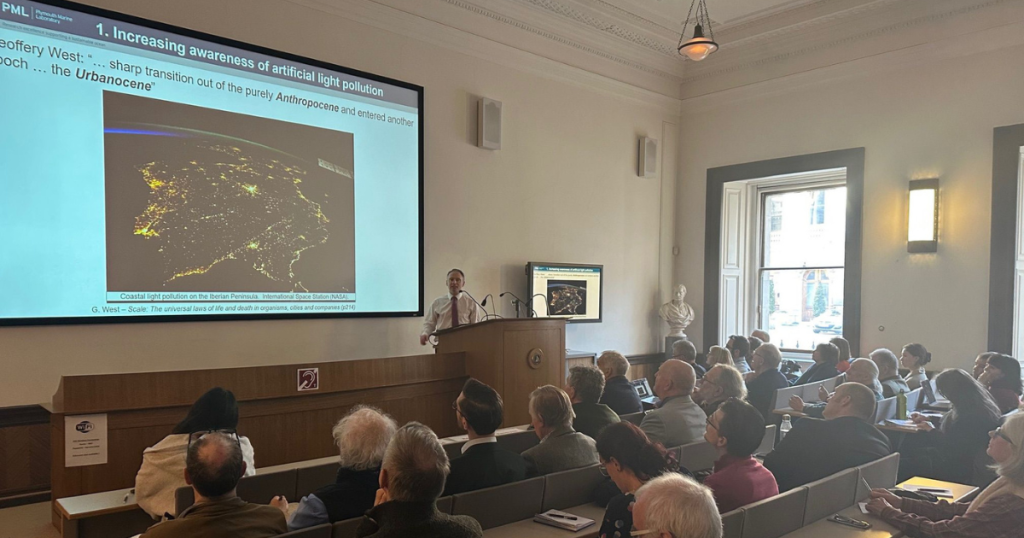
AquaPLAN partner Tim Smyth (PML) presenting research at the RAS 2025 Conference
Keep up to date with all the latest from AquaPLAN