
News
Listening beneath the waves: AquaPLAN researchers feature on “Unchatted Waters” Podcast
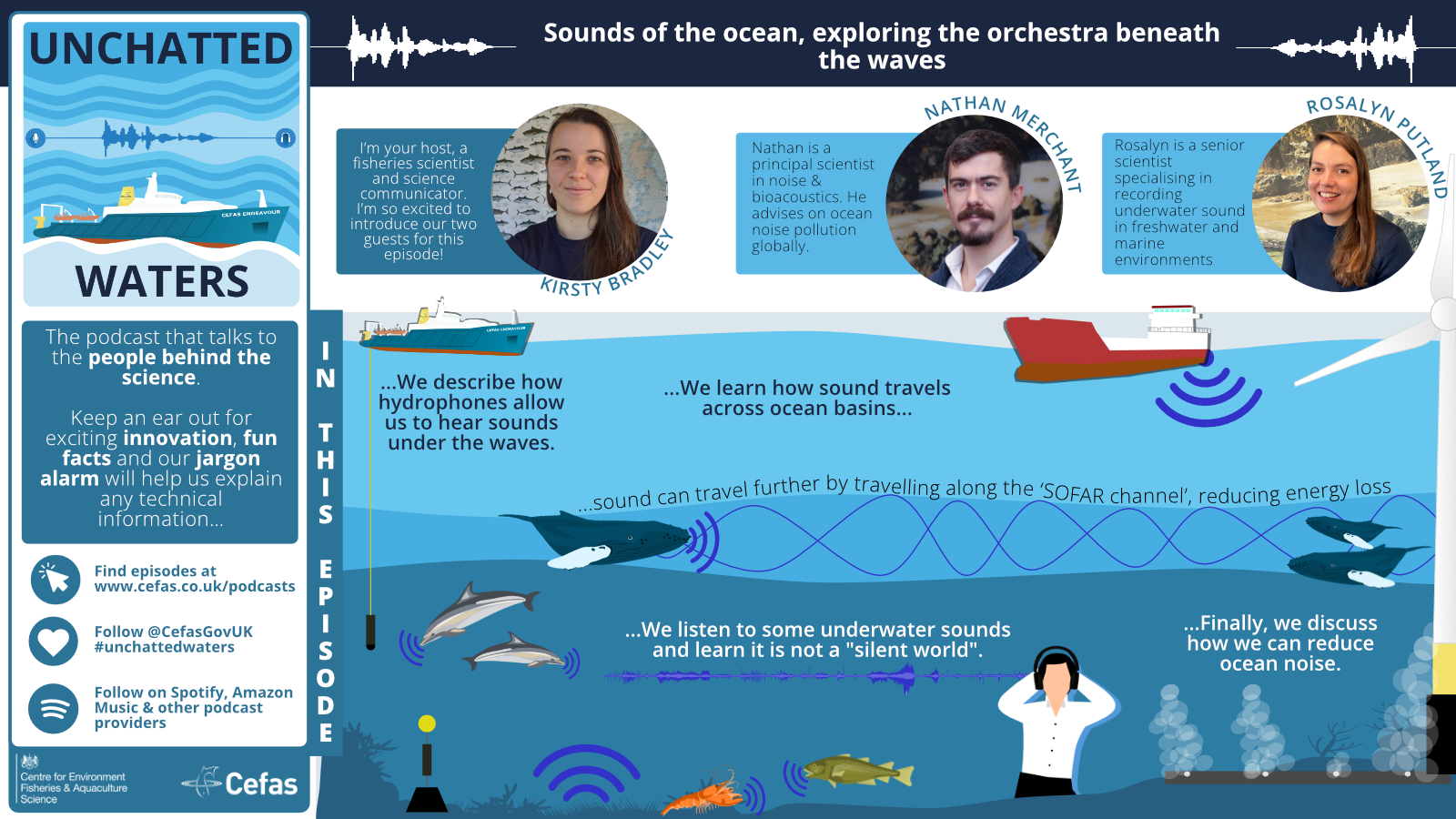
What does the ocean really sound like? Far from being a silent world, the marine environment is alive with a rich and complex acoustic landscape, an underwater orchestra shaped by natural forces, marine life, and human activity. In Episode 9 of The Centre for Environment, Fisheries and Aquaculture Science’s (CEFAS) Unchatted Waters podcast, titled “Ocean Sounds”, AquaPLAN researchers Rosalyn Putland and Nathan Merchant take listeners on a journey beneath the surface, exploring how sound defines life underwater and why it matters for marine ecosystems. Hosted by CEFAS fisheries scientist Kirsty Bradley, the episode invites audiences to “dip their ears” into the ocean and discover the remarkable soundscape beneath the waves—a symphony composed of multiple sources working together like instruments in an orchestra.
As highlighted in the discussion, underwater sound can broadly be understood as a combination of:
- Geophysical sounds (or geophony), including waves, wind, rain, and even seismic activity
- Biological sounds (biophony), produced by marine organisms such as whales, fish, and invertebrates
- Human-made sounds (anthrophony), from ships, offshore infrastructure, and other activities
Together, these elements create a dynamic acoustic environment that marine species rely on for communication, navigation, feeding, and survival. Unlike on land, sound is the most effective way to transmit information underwater. It travels faster and over greater distances, making it a critical sensory channel for marine life. In the podcast, Rosalyn and Nathan emphasise how animals, from whales communicating across vast ocean basins to fish detecting predators and prey, depend on sound as their primary way of interacting with the environment. This reliance means that changes to the acoustic environment can have significant ecological consequences. Disruptions to soundscapes can interfere with behaviours such as breeding, feeding, and migration, ultimately affecting the health and stability of marine ecosystems.
A key theme of the episode is the increasing influence of human activity on the ocean’s natural soundscape. Research in marine bioacoustics shows that sounds from shipping, construction, and other sources can dominate underwater environments, sometimes masking the natural signals animals depend on. Nathan, who leads CEFAS’ Noise and Bioacoustics Team, has dedicated his work to understanding and quantifying these impacts, helping to inform policy and management strategies aimed at reducing underwater noise pollution. Rosalyn’s research further illustrates how even relatively small increases in human-generated sound can alter aquatic environments, highlighting the importance of establishing baseline soundscapes to detect and manage change over time.
The themes explored in their Unchatted Waters episode strongly align with the goals of the AquaPLAN project, which is investigating how light and noise pollution together impact aquatic biodiversity. Understanding underwater soundscapes is fundamental to this work. By listening to the ocean, scientists can track biodiversity and species presence, monitor ecosystem health, identify changes linked to human pressures and develop evidence-based solutions to mitigate pollution impacts. Projects like AquaPLAN are working to bridge knowledge gaps by combining cutting-edge acoustic research with policy development, ensuring that emerging pollutants such as noise are effectively addressed in marine management.
One of the most powerful messages from the podcast is the importance of simply listening. The ocean’s soundscape provides a unique window into the state of marine ecosystems, revealing patterns and processes that are otherwise invisible. From the crackle of coral reefs to the distant calls of whales and the hum of passing ships, every sound tells a story about life beneath the waves.
Listen now or use the transcript option for Episode 9: Ocean Sounds
Keep up to date with all the latest from AquaPLAN