
News
Seeing, hearing, and swimming: light and noise also pollute the oceans
When they hatch, loggerhead turtle hatchlings follow the light. For hundreds of thousands of years, they were guided by the faint glow of the stars and the moon’s reflection on the sea’s surface. In recent decades, they’ve been heading for beachfront hotels. In their world, land means darkness and ocean equals light. But that has changed before they’ve had time to understand it. The effect of light pollution on the orientation of newborn loggerhead turtles is not new. It was first described in a scientific article published in 1990. In the 35 years since then, there has been much discussion about light pollution and its impacts on ecosystems and human health. But that hasn’t stopped us from continuing to fill the planet with light: since the beginning of the 21st century, artificial light at night has increased by 49%, according to data collected by the Institute of Astrophysics of Andalusia.
When we think about ocean pollution, our minds likely go to fish entangled in plastic or birds with oil-covered feathers after a spill. But there are many other forms of pollution. Excessive light and noise from human activities are also interfering with the lives of marine life. And loggerhead turtle hatchlings are just one of hundreds of examples documented in scientific literature.
A disorienting light
The North Star and the Southern Cross guide sailors. Cory’s shearwaters and storm petrels follow the glimmers at night to orient themselves on their flights over the open sea. Sardines and corals follow the rhythm of the lunar cycles, and zooplankton complete one of the greatest migrations on the planet each day, moving from the depths where they spend the daylight hours to the surface waters at night. All species on the planet have evolved under the natural cycles of light and darkness, those marked by the sun, the moon, and the Earth’s movements, and have learned to navigate by them.
In recent decades, however, artificial light has invaded everything, rendering useless the natural clocks we all carry within us. The most obvious result is disorientation. “The cycles of light and darkness allow individuals to know what time of year it is and trigger a series of biological responses that adjust their behavior to that specific moment, such as reproduction or migration,” explains AquaPLAN partner Airam Rodríguez, a researcher at the National Museum of Natural Sciences (MNCN-CSIC) in Spain and an expert on the impact of light pollution on birds. His recent work focuses on the effects on shearwaters, petrels, and storm petrels —seabirds that spend their entire lives in the water and only travel to land to mate. “When they are ready to leave the nest, the chicks make their first night flight without parental care. But many become disoriented and end up attracted to human lights, crashing into anything,” the biologist explains. It’s not entirely clear why this happens (the effects of light pollution on marine life are still poorly understood), but researchers are working with three hypotheses: the birds become disoriented because they don’t perceive natural light signals from the sky; the chicks mistake artificial lights for bioluminescent prey; or the young birds’ eyes are not yet fully developed (they usually grow up in dark places). It’s also possible that the reason is a combination of all of these.
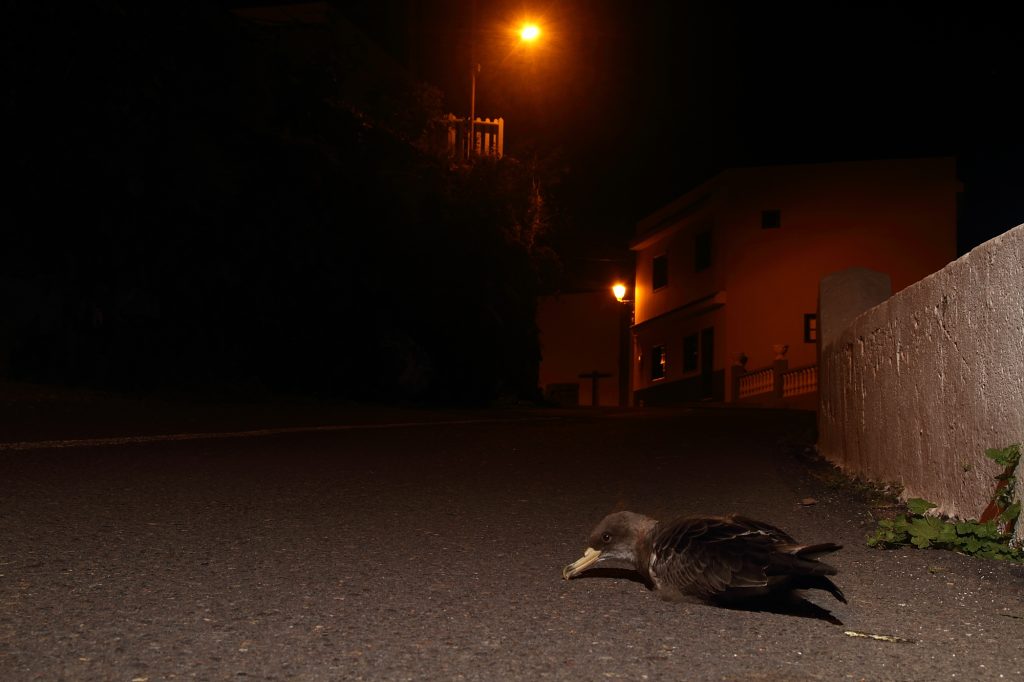
Credit: Beneharo Rodríguez
In addition to the confusion experienced by chicks, other effects have been observed in these birds. When lights are nearby, adults spend less time in the nest. Young birds often take advantage of fishing boat lights to their advantage and capture their prey (which then becomes a disadvantage for the captured animal). And the attraction effect generated by the lights of offshore infrastructure, such as oil platforms or offshore wind farms, is beginning to be studied. “When we talk about light pollution in the sea, we’re not just talking about coastal areas, which are obviously affected because they are closer to artificial light sources. We’re also talking about indirect pollution, such as night sky glow, which affects areas relatively far from human populations, and non-terrestrial light sources, both stationary, like oil platforms, and mobile, like ships,” explains Elena Maggi, a researcher at the University of Pisa in Italy, and coordinator of AquaPLAN, a major European scientific project that aims to address these knowledge gaps by jointly studying light and noise in multiple species and different aquatic environments, both marine and terrestrial.
“We all have a series of internal clocks that regulate our activity based on light and dark cycles. But if there is light when it should be dark, they become disrupted,” the Italian biologist emphasises. Light pollution thus affects the movement of species, their reproduction, and their metabolism. It also influences the habits of those creatures that camouflage themselves at night to escape predators, which can now see them. “And we are increasingly seeing impacts on invertebrates and microorganisms,” Maggi adds. “At night, when they are less visible, some zooplankton species migrate vertically to the surface to feed. It is the largest migration on the planet in terms of biomass . But with artificial light, this stops happening. Any change in plankton behaviour affects the entire ocean food chain,” explains the researcher. “We know much less about the impacts on plants and algae, but, for example, recent studies indicate that artificial light at night can affect the activation of some genes in seagrass (Posidonia oceanica). And there is also growing evidence of the effects on the larvae of many species, which in many cases are guided by the presence or absence of light.”
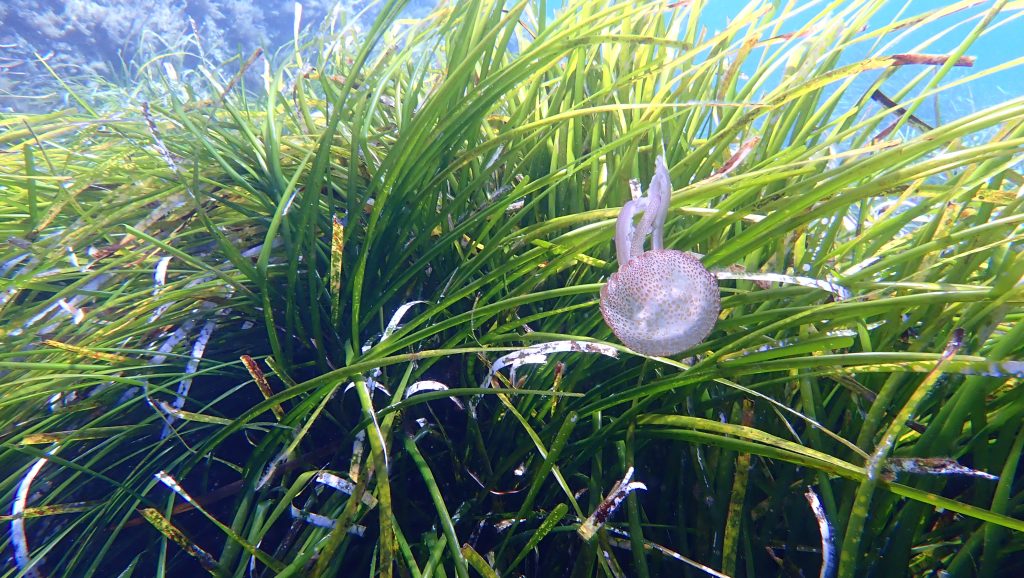
Credit: University of Pisa
The noise that deafens the sea
On 7 March 1949, a team of researchers from the Woods Hole Oceanographic Institution in the United States was sailing off the coast of Bermuda when they decided to lower a rudimentary underwater recording device into the sea. When they retrieved it, they verified that everything had been recorded correctly and ended up storing the disc in the institution’s archives in Massachusetts. There it remained, forgotten, until earlier this year when a researcher from the same center rediscovered it. It turns out that this record contains what is believed to be the oldest recording of a humpback whale’s song (which has been digitized and can be heard here). But what has most surprised the scientific community is the background noise over which the cetacean’s voice is heard. Because it is silent. A similar recording today would almost certainly have the sounds of ship engines, sonar, or seismic surveys searching for fossil fuel deposits in the background.
Cetaceans are one of the groups of species in which the impact of noise pollution has been most studied. Noise interferes with their communication and navigation systems, affects their foraging techniques, causes them chronic stress, and reduces their reproductive success, among other effects documented by numerous studies published in recent decades. But noise also affects species far less conspicuous than whales and dolphins. “Cetaceans are visible, charismatic species with auditory systems comparable to those of humans, which has facilitated both the study of the effects of noise pollution and the communication of the results to the public,” explains Marta Solé, a researcher at the applied bioacoustics laboratory of the Polytechnic University of Catalonia. “However, this is an incomplete view. For example, we now know that marine invertebrates are also sensitive to noise and can experience significant effects. For a long time, we assumed that it didn’t affect them because they don’t have hearing in the classical sense.”
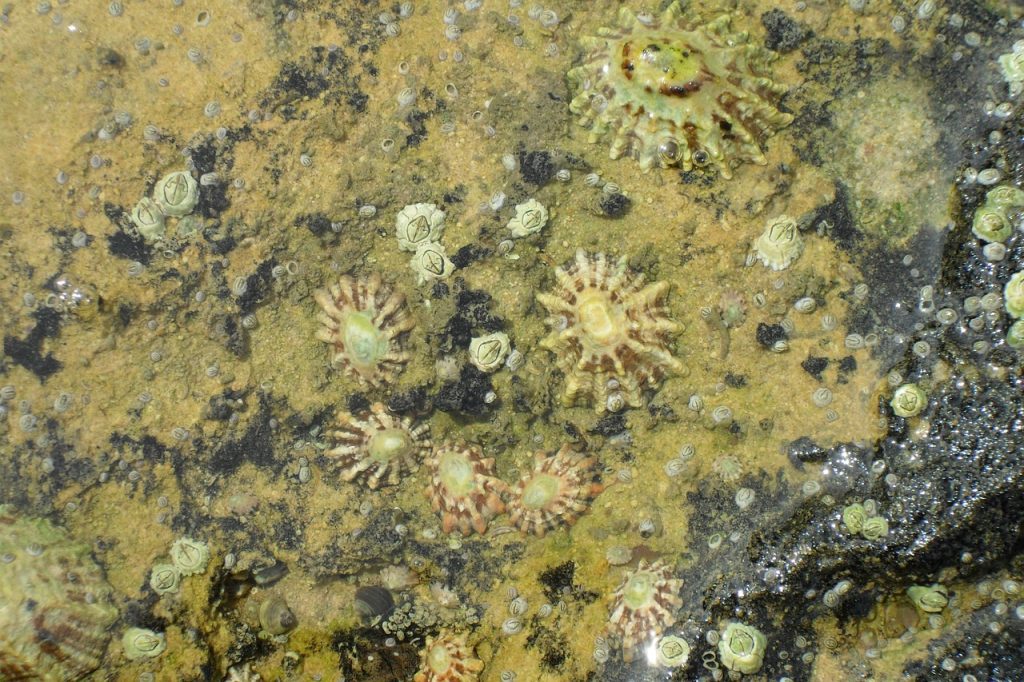
Solé’s work has focused primarily on the effects of noise pollution on cephalopods, mollusks, gastropods, cnidarians, and crustaceans. “The key is understanding that sound is not just something you hear, but a form of mechanical energy . Invertebrates primarily detect the movement of particles generated by acoustic waves, rather than sound pressure. From this perspective, noise becomes a physical stimulus capable of interfering with essential biological processes,” she adds.
The most recent studies show that the effects of noise on invertebrates range from cellular and ultrastructural damage to behavioral changes. Among other things, stress responses, damage to sensory organs, metabolic alterations and behavioral changes, developmental problems and malformations, and increased mortality in early life stages have been detected. “Invertebrates play key roles in marine ecosystems, such as filtering water, recycling nutrients, and maintaining food webs. If noise disrupts their behaviour, physiology, or reproduction, these functions can be compromised,” explains the Catalan researcher. “This can generate cascading effects that impact other species and the overall balance of the ecosystem, making noise a major driver of environmental change.”
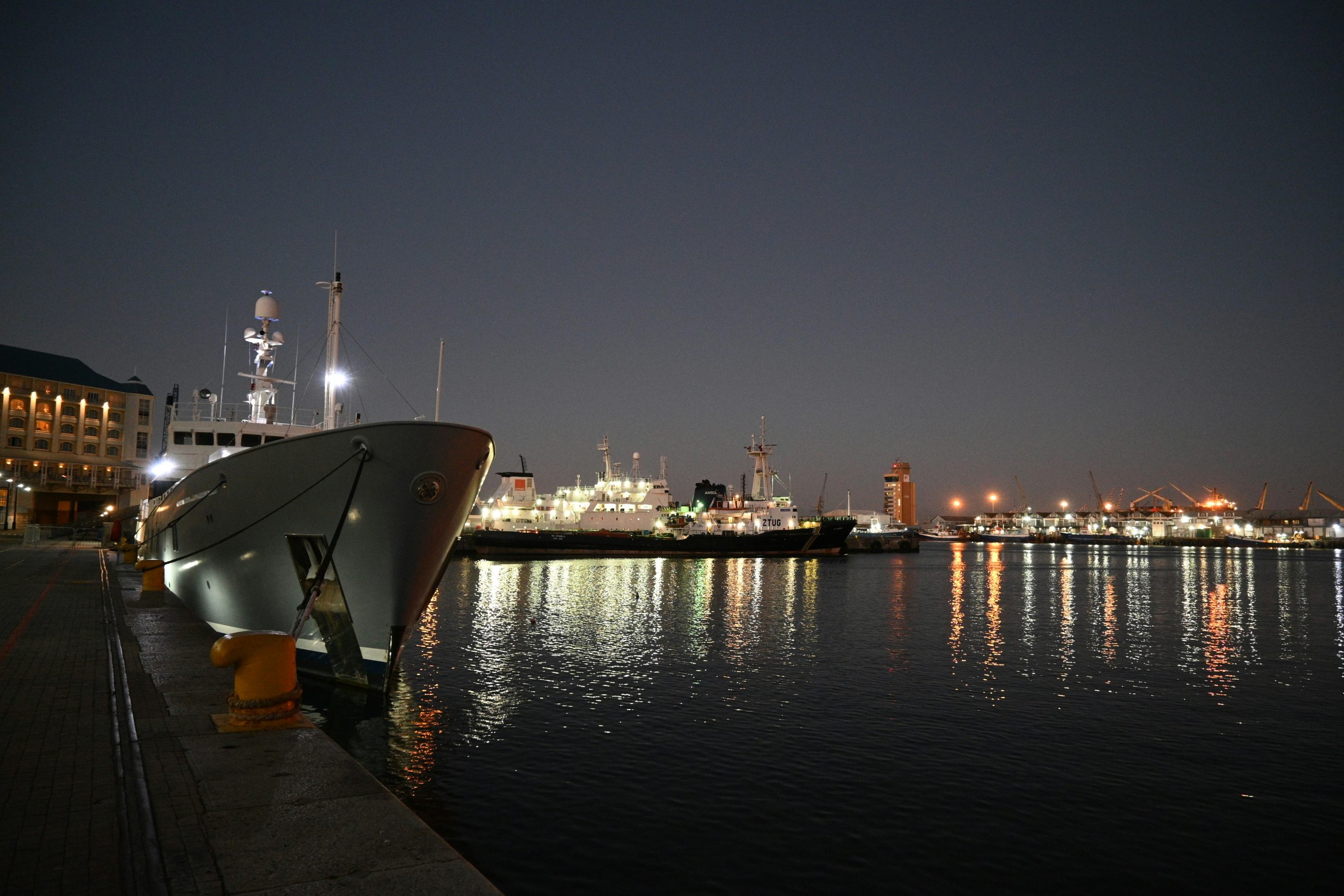
Data collected by the AquaPlan project shows that noise pollution is present in much of the world’s oceans and is especially evident in enclosed, heavily trafficked seas, such as the Mediterranean. “Noise pollution is an increasingly significant human pressure due to the growing use of the marine environment, both on the high seas, with cargo ships, large cruise ships, and offshore wind energy projects, and at coastal levels, with uses such as recreational boating and fishing,” says Josep Lloret, a researcher at the Institute of Marine Sciences (ICM-CSIC).
Lloret is also the principal investigator of the BIOPAÍS project , which aims to assess the potential ecological and social impacts of large floating offshore wind farms in the Mediterranean. According to the studies carried out, all phases of offshore wind projects produce noise and vibrations, although noise pollution is especially noticeable during the construction phase. Beyond wind farms, the effects on ecosystems of human activities such as fishing and aquaculture, recreational boating, cruise ships, freight transport, gas pipelines, and desalination are clear. “Our data show that the expansion and concentration of industrial activities within or adjacent to areas of high ecological value is incompatible with conservation goals without much more careful planning and the precautionary principle,” the researcher adds.
Shall we turn off the lights?
The question is repeated time and again with every environmental problem that is discovered. What do we do now? In the case of noise and light pollution, the easy answer is to turn off the lights and stop making noise. “We’re not here to say that everyone should turn off the lights, because that’s impossible,” explains Elena Maggi. “But there are guidelines that can be applied to terrestrial and aquatic environments to mitigate the effects of light pollution: use light only when and where necessary, use appropriate lamps to illuminate only the areas where it is needed, avoid directing light towards the surface of the sea, and reduce the intensity.”
“We often have more lights than necessary, something that has become more evident with the development of LEDs, which seem to consume virtually no energy,” adds Airam Rodríguez. “The best approach is to try to use the reddest or warmest light possible, attempting to eliminate all radiation from the bluer part of the light spectrum, which is the most damaging and penetrates the water column the most. It would also be necessary to reduce light spill into areas that are not meant or don’t need to be illuminated.”
On the other hand, in highly human-modified environments like the Mediterranean, all researchers agree that the cumulative effects of different types of pollution must continue to be studied . “Noise never acts in isolation, but rather in combination with other stressors such as climate change or chemical pollution,” emphasizes Marta Solé. “This interaction can amplify the impacts, leading to more complex and difficult-to-predict cumulative effects.”
“There are many ways to mitigate the impacts of noise pollution, such as not building marine infrastructure during cetacean migration,” concludes Josep Lloret. “But what is vital is to have good marine planning to avoid industrial activities in sensitive areas, such as marine protected areas or those within the Natura 2000 network, which are key to the conservation of vulnerable species.”
Translated and adapted from the original article by Juan F. Samaniego published in Spanish as part of the ‘Oceans Special’ project co-produced by Climática together with Ecologistas en Acción as part of the MED30 project, read article here.
Keep up to date with all the latest from AquaPLAN